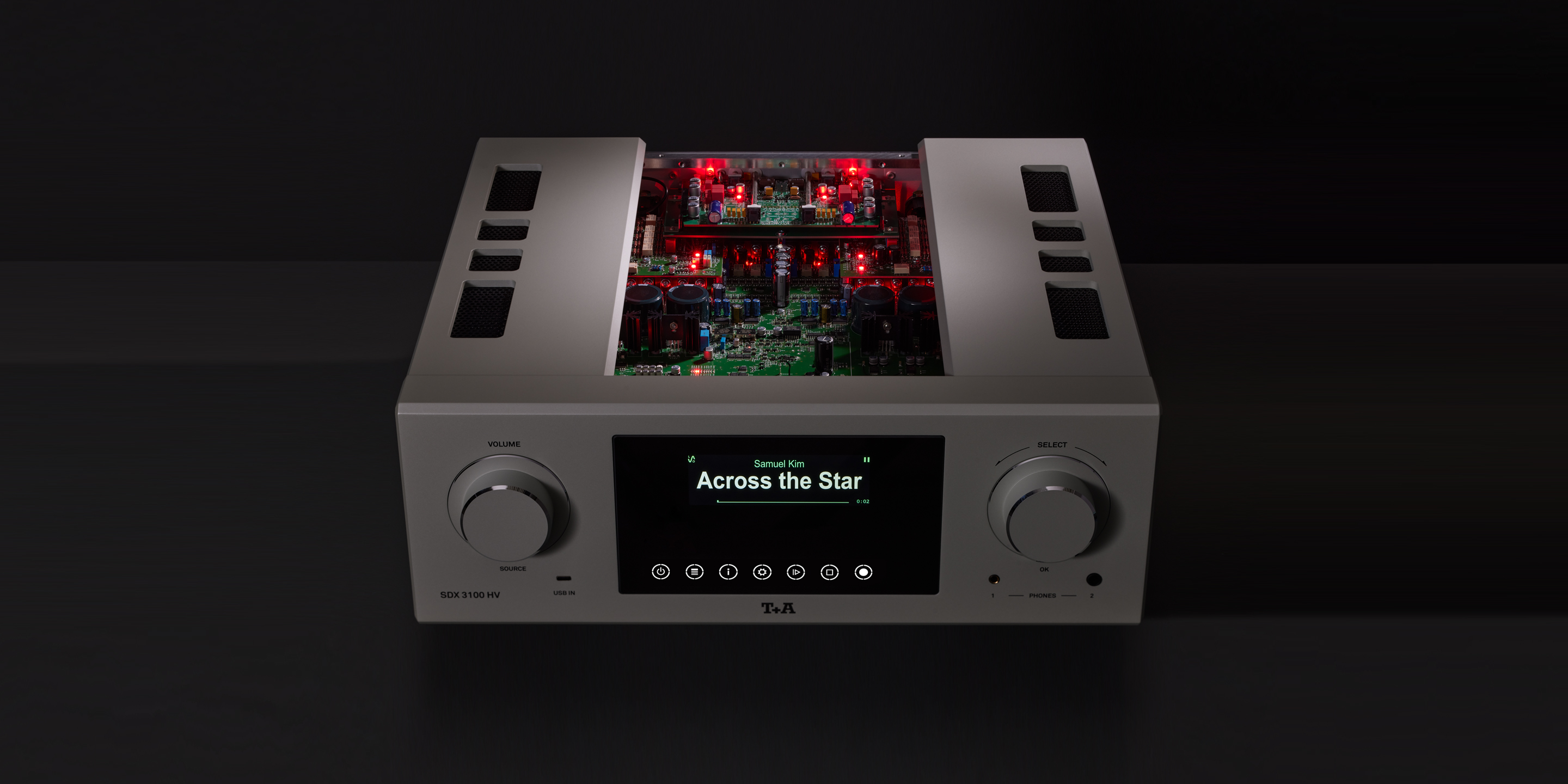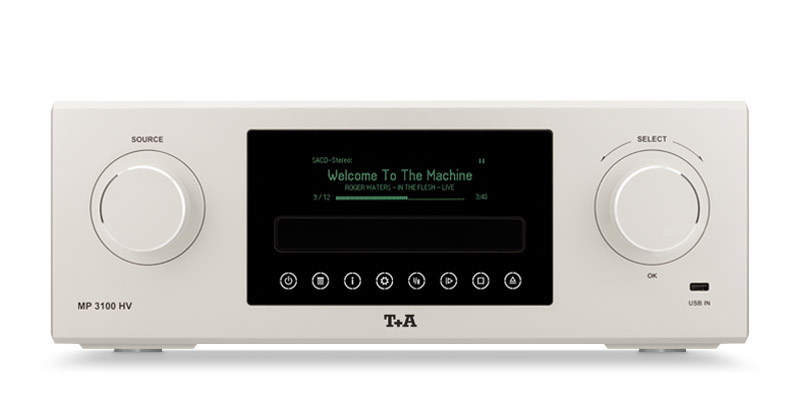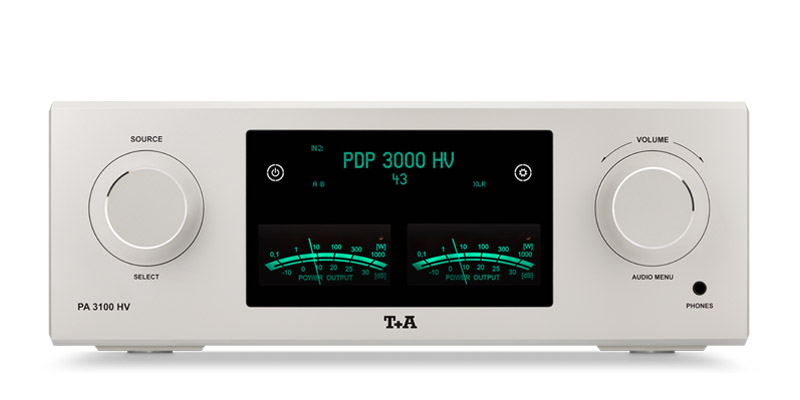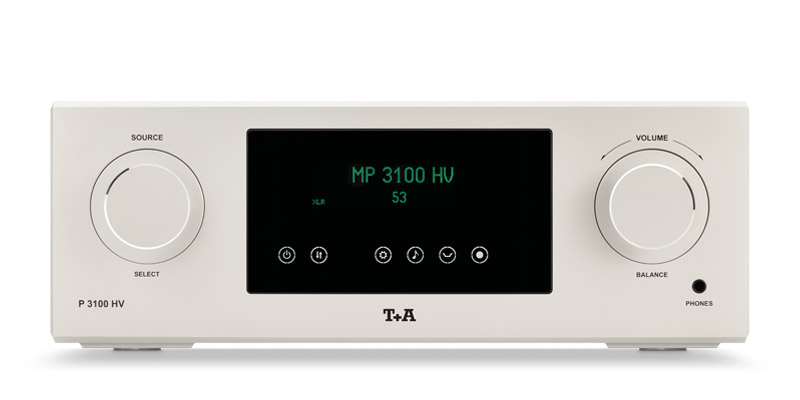
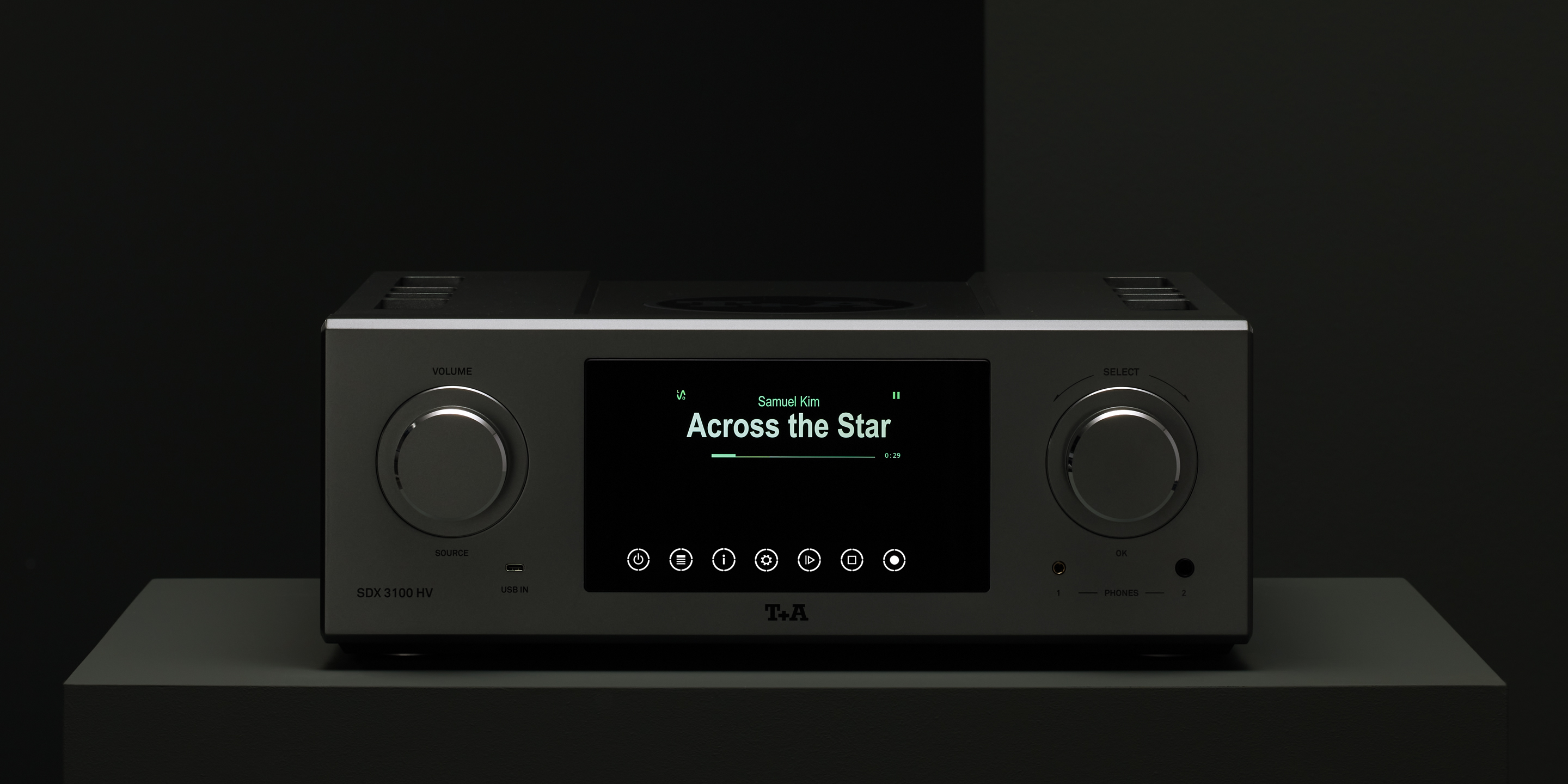
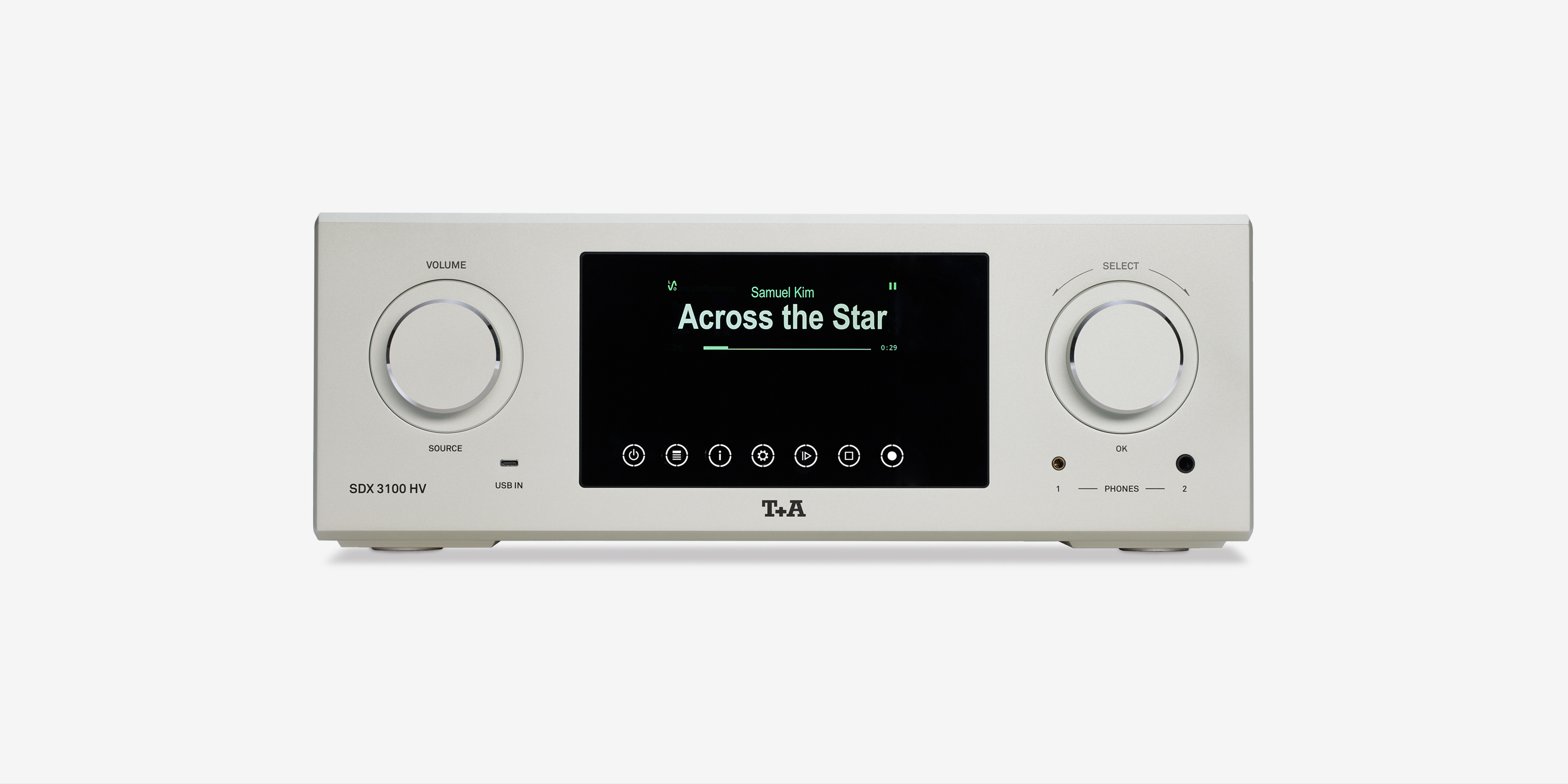
The SDX 3100 HV

For decades, the pursuit of perfection has been a fragmented quest. We decided this was inefficient. By refusing to accept technical limits, our engineers in Herford combined easy to use streaming, the world's first Digital/Analog converter with native DSD 1024 processing and a reference grade pre-amplifier section.
We believe the journey of a signal, from the digital network to your ear, should be a direct and monolithic one. Our third-generation Audiophile Streaming Architecture (ASA G3) is not a collection of features; it is our unified answer to a multitude of choices. Whether the source is TIDAL, Qobuz, or a mobile device via connect services or Bluetooth, the path is already perfected. This unified approach finds its ultimate expression in the native network playback of DSD files through our T+A True-1Bit converter—a direct, lossless bitstream of reference quality.  We perfected every connection so that you have only one decision left to make: what to listen to first. At the heart of the SDX 3100 HV is a converter architecture forged from a refusal to compromise. This meant  processing PCM at 32-bit / 768 kHz and DSD natively up to 1024 without conversion.

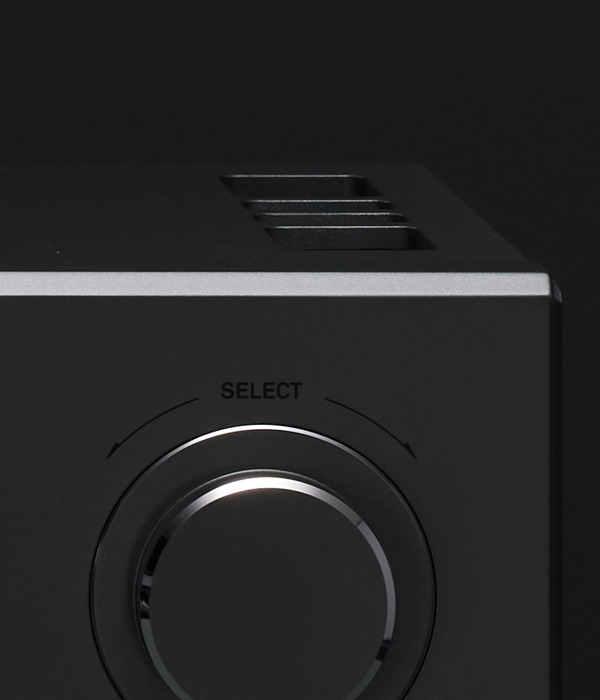
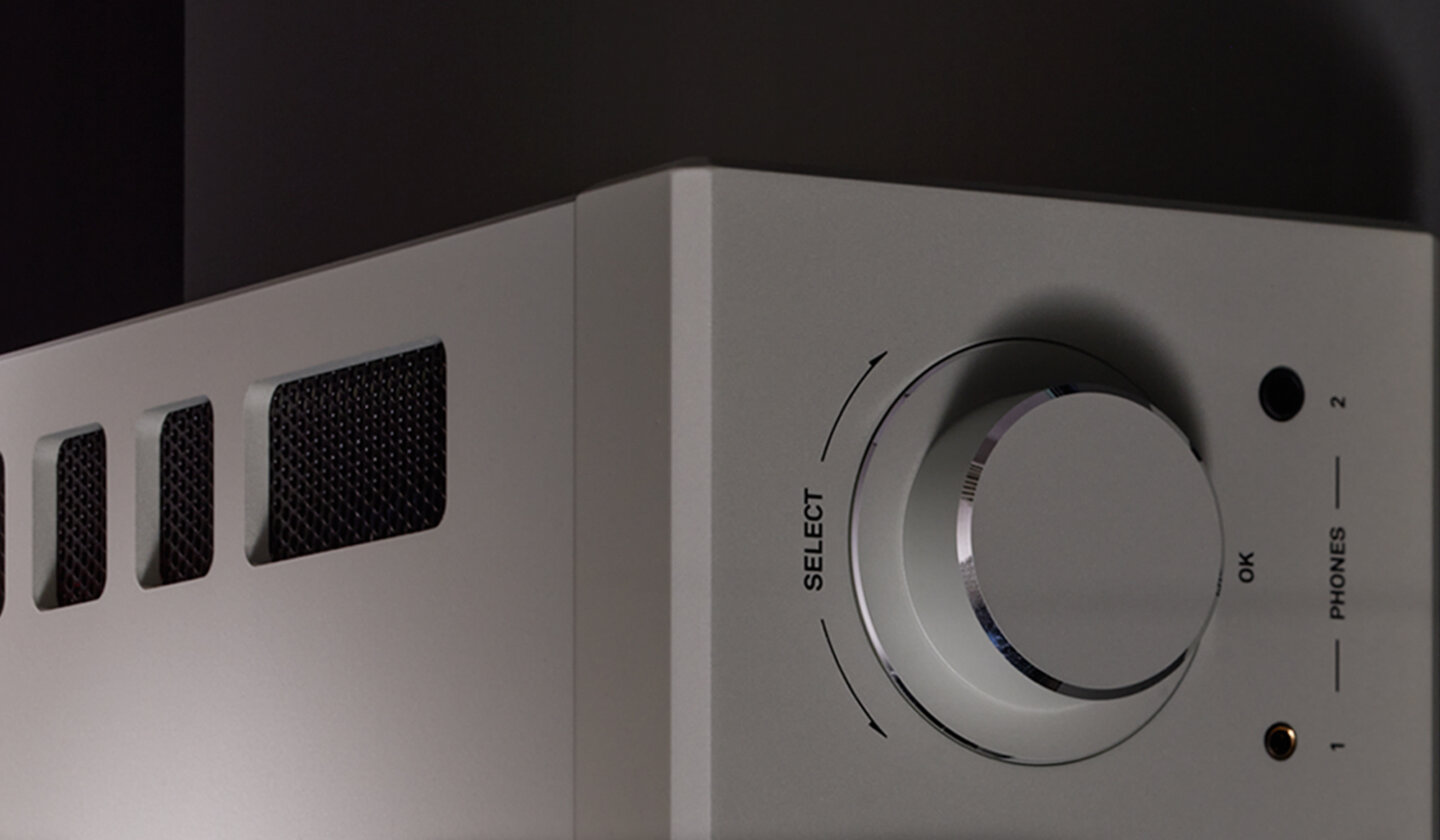
To achieve these performance levels, the proven converter section of the SDV 3100 HV has been refined even further. Data rates once deemed impossible are now handled with effortless ease. As a Unified Reference Instrument, the SDX 3100 HV is designed to be the heart of your system. Its consequently improved reference-grade preamplifier section ensures it assumes this role with absolute authority, whatever your final configuration may be. Control is immediate and direct, whether through the instrument’s buttons and precision milled rotary controls themselves, the included solid metal F 3100 remote, or the T+A MusicNavigator G3 app. Each is designed not for endless tinkering, but as a simple conduit to the music itself —a tool to command, not to distract. 
The SDX 3100 HV is a milestone, not simply because it comes from a legacy of firsts, but because of what it represents. It is proof of what becomes possible when you cease to accept the status quo of complexity and move towards integration. It is more than a component; it is the destination. It is where the search for the ultimate source ends.

De-Jitter Masterclock
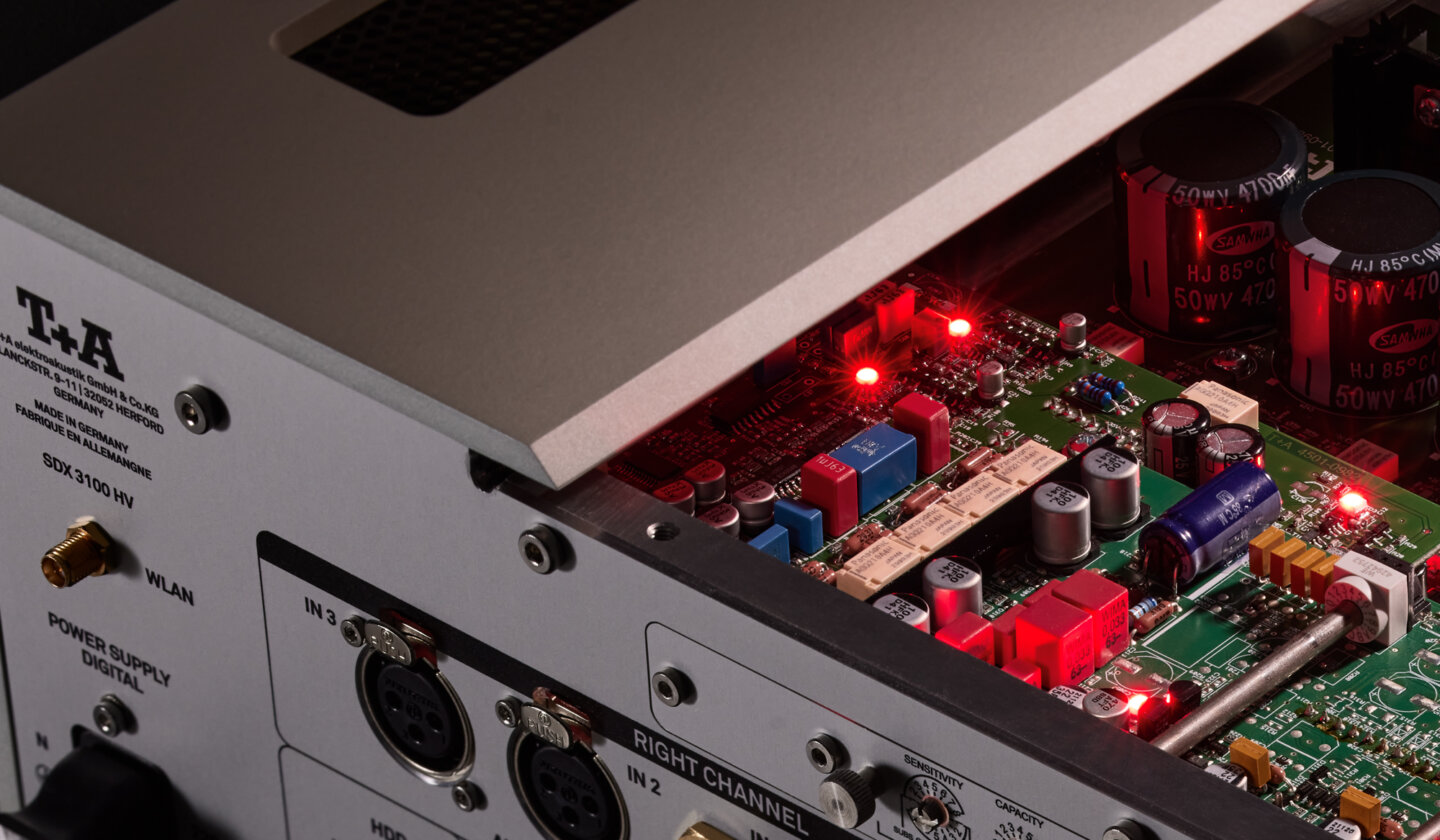
The journey to unadulterated musical fidelity demands more than exceptional conversion; it requires the complete elimination of even the most minute sources of interference. Jitter - microscopic timing deviations in the digital clock - is a ghost in the machine, an invisible phenomenon that degrades the listening experience when using digital sources. Our response is not a simple filter; it is a statement of intent. The T+A De-Jitter Masterclock, developed here in Herford, is our deliberate and audiophile answer to this final, insidious variable. It is a multi-stage purification process designed to cleanse incoming digital signals of even the most severe jitter artifacts, so that you never have to question your source again. 
In the first stage, a raw clock signal is extracted and meticulously examined by microprocessors. We agonised over the strict criteria for frequency and stability that this signal must meet before it is deemed worthy of the Masterclock. 
If the signal fails to meet these uncompromising standards, it is not rejected. It is perfected. The signal is routed through a specially designed second Jitterbug, where an additional PLL stage refines it, reducing residual jitter by a factor of four. This is our obsession made manifest: we do not just accept a signal, we force it to become perfect. A signal that has passed this test is completely decoupled from all input jitter and further processed by two precisely calibrated quartz oscillators. This is the final, uncompromising step. Each oscillator is dedicated to a specific clock family - one for 44.1 kHz multiples and the other for 48 kHz multiples - creating a clocking foundation free from digital artifacts and wholly devoted to the music.
This is more than a technical feature. It is the serene confidence that the perfect choice has already been made for you, even at the microscopic level. It is the end of doubt.
Path Separation Technology

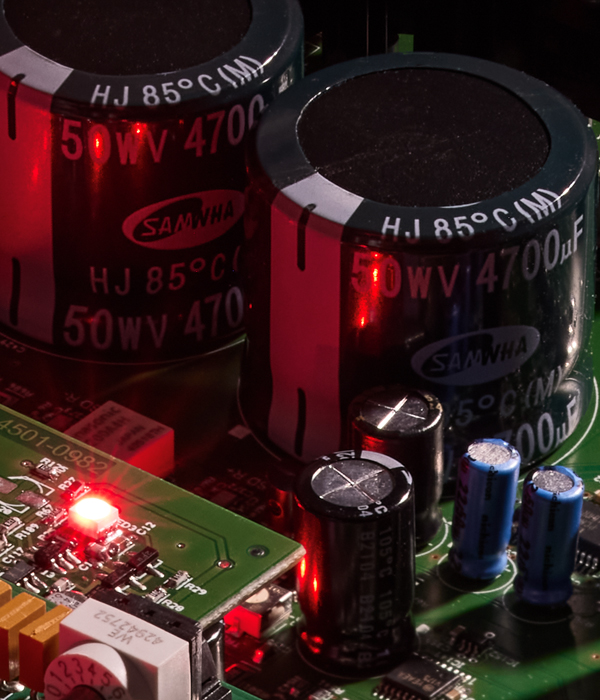
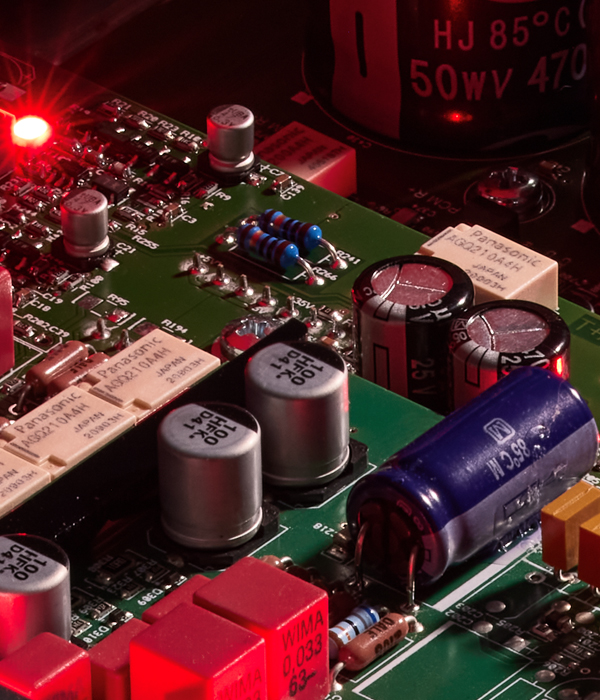
Our approach to digital conversion is not merely different; it is a rejection of the typical compromises. Whilst converting a DSD signal to PCM before processing is an often-employed practice, we regard it as an unnecessary detriment to of the signal’s integrity. This conviction is the very soul of the T+A Path Separation Technology with the bespoke T+A True 1-Bit DSD and Quadruple PCM Converter. It is not a feature; it is our philosophy made manifest in technology. By processing DSD files natively, without conversion, we ensure the 1-bit stream remains precisely what it was intended to be: unaltered, direct, and pure. This same spirit defines our treatment of PCM signals by the T+A Quadruple Converter. Its fully symmetrical architecture uses four 32-bit BurrBrown converters (eight channels in total) in a unique configuration that does not just process the signal but perfects it. By compensating for even the most microscopic non-linearities and further reducing the already imperceptible noise floor by another 6 dB, we deliver absolute linearity and dynamic purity. This is not a specification to be boasted about. It is the tangible result of a spirit where perfecting even the minutest of variables is standard practice. We recognize that the ultimate connoisseur, seeks not to endlessly tweak, but to achieve a final, perfect harmony with the recording itself. For this reason, our Bezier filter polynomials are not meant as a gateway to mere experimentation. Rather, they are a final, subtle instrument of refinement. These six precisely calculated stages, including two uncompromising NOS modes, allow for the character of the converter to perfectly match the unique atmosphere of a recording. This is not about catering to a whim; it is about providing a definitive tool to honour the source. It is the last and only choice to make, transforming precise playback into an emotionally resonant experience—the final peace that has been searched for for years.

ASA G3

Our third-generation Audiophile Streaming Architecture (ASA G3) is the high-fidelity bridge between the HV Series and our connected world. It was conceived with a clear purpose: to grant you freedom to choose your source, while providing the confidence that the signal path for any selection you make has already been perfected. We believe your choice of what to listen to should never be compromised. That is why at the heart of the ASA G3, advanced network boards process every incoming signal with uncompromising integrity. Whether you prefer high-resolution services like Deezer, Qobuz, and Tidal, access local network files up to 192/24 (HD), or stream from a mobile device using Connect Services, the result is the same: best possible quality, every time. Even the convenience of wireless Bluetooth listening is elevated, with aptX HD codecs supporting uncompressed FLAC files to ensure sonic purity. This philosophy culminates in a milestone for our engineers here in Herford: the ability to natively stream DSD files directly from your network. Preserving the integrity of this exquisite format is what drove our engineers not only when laying out converter sections but also whilst conceiving the lines of code which make the ASA G3. The signal travels a direct, unbroken path to the T+A True 1-Bit Converter, where it is processed in its original bitstream - free from conversion, free from loss. The ASA G3 is our commitment to your freedom. It seamlessly merges effortless access to a universe of sources with the uniquely refined signal processing that defines T+A. It is not just streaming; it is the assurance that whatever you wish to hear is rendered with the profound fidelity your music always sought.

DASS

Over forty years of experience have taught us that sound is not created solely within circuitry; the housing plays a decisive role in eliminating detrimental variables. This is why our dedication to perfection begins with the enclosure itself. It is designed as a fortress against interference: The walls of our HV enclosures is crafted from solid, non-magnetic aluminum. This material choice is critical; unlike ferrous metals, it remains electromagnetically inert, refusing to interact with the dynamic fields generated by the internal circuitry. By eliminating the risk of magnetic hysteresis and eddy currents - subtle distortions that can veil sonic details - we ensure the enclosure itself never becomes a source of sonic coloration. This provides profound electromagnetic shielding - a fundamental prerequisite for eliminating external variables and achieving pure, uncolored sound. Inside, precision-milled aluminum plates, between 10 and 15 millimeters thick, create natural, shielded compartments. This intelligent arrangement is the foundation for the complete decoupling of individual functional sections, ending the inner conflicts of internal interference. Whether formed through elaborate extrusion profiles or milled from solid blocks, every detail has been conceived with the utmost purpose-driven care. Anti-magnetic materials eliminate even the finest distortions, while special lacquers and hard anodization ensure a perfect finish. Thus, the system’s impressive weight is not merely a reflection of its quality; it is a deliberate act of mechanical isolation from ambient influences.

Headphone amplifier

For many the most profound listening is a solitary act. It is a direct, intimate connection that deserves its own form. For this reason, the SDX 3100 HV’s headphone amplifier is engineered to provide the same level of intimacy to headphones as it does to power amplifiers.
The amplifier is built entirely on our HV technology and operates in pure Class A mode. This is not a feature to be listed, but a philosophical commitment. It is the only way to guarantee the effortless, distortion-free, and utterly transparent performance required to achieve a final peace with the music. The anxiety of whether your headphones are the perfect partner for your amplifier is another variable we have eliminated. The discretely designed output stage is engineered for high current delivery, ensuring it commands even low-impedance models with absolute authority. Its ability to unleash its full potential with high-impedance headphones means the tyranny of choice has been overthrown. Details like a dedicated voltage regulation system, thermal stability, and optimized noise behaviour are not extras - they are the tangible result of perfecting every step of the signal’s way.

Preamplifier

The SDX 3100 HV is conceived to navigate the inevitable evolution of the high-end system. As the journey toward sonic perfection increasingly favors integration, this instrument ensures that the path to simplicity need never be paved with compromise. At its heart lies a Double Mono “State of the Art” circuit architecture.This is not a mere specification; it is our method for achieving the absolute channel separation and uncompromising signal purity we seek. Built entirely with discrete components on our proprietary HV technology, it is the tangible end of crosstalk and interference. Being constructed in full symmetry and galvanically isolated from the digital domain allows every analog output stage to deliver maximum linearity and dynamic headroom with unwavering precision. For volume regulation, we incorporated the high-precision, relay-controlled module tried and proven in our other HV series instruments. This system, with its tolerance of less than 0.05 dB at -60dB, ensures exact level matching even at the lowest volumes. Every detail of the SDX 3100 HV’s preamplifier section reflects a singular goal: to deliver control and clarity at a level where technology becomes invisible and agony of choice becomes unnecessary.

Digitally analog? 

Analog Perfection in the Digital Age

Although the SDX 3100 HV is designed as the state-of-the-art successor to the SDV 3100 HV streaming DAC, an uncompromisingly analog heart beats inside it as well. Three special features underscore this philosophy, proving that high-end performance requires no digital shortcuts:

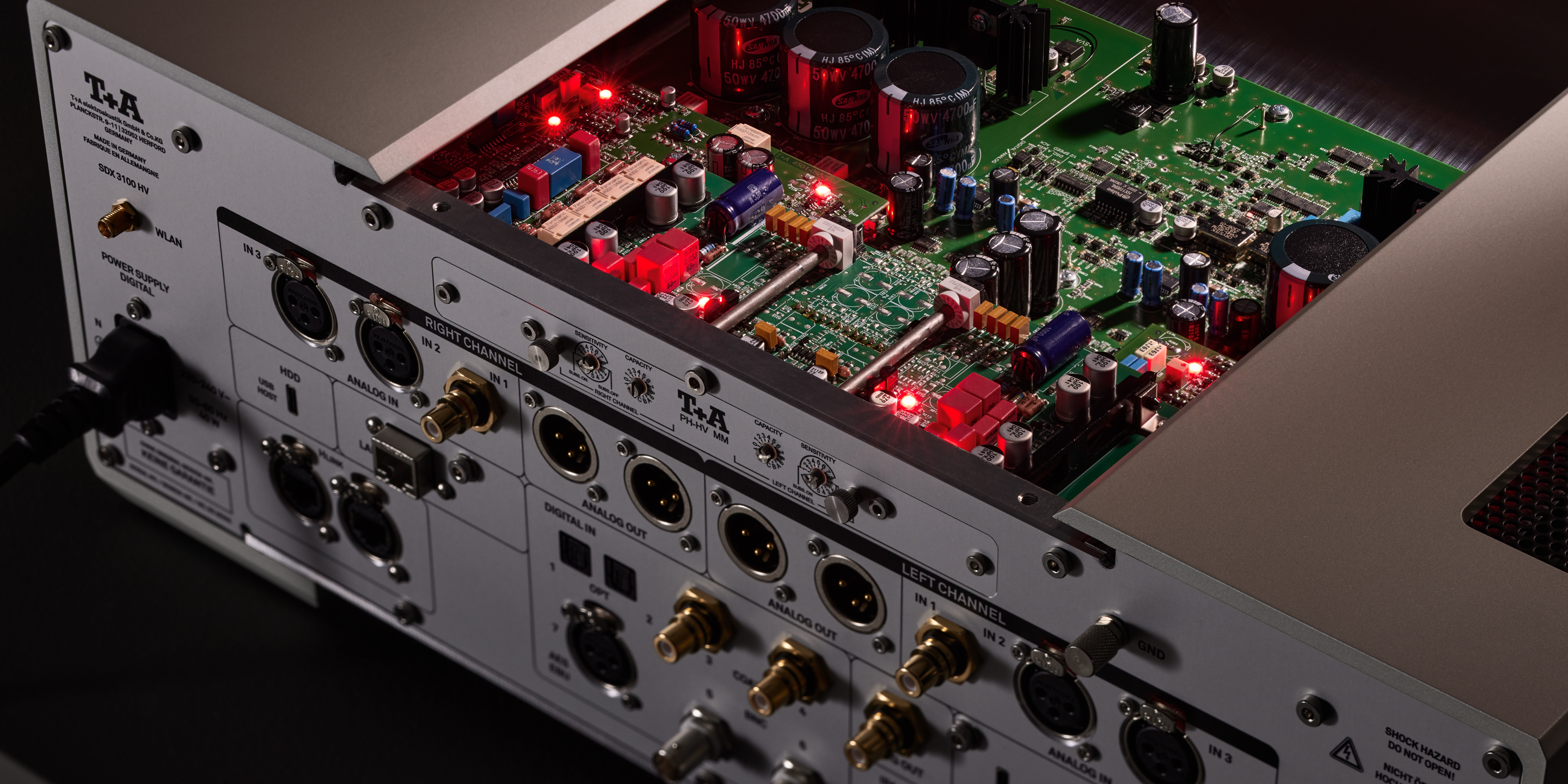
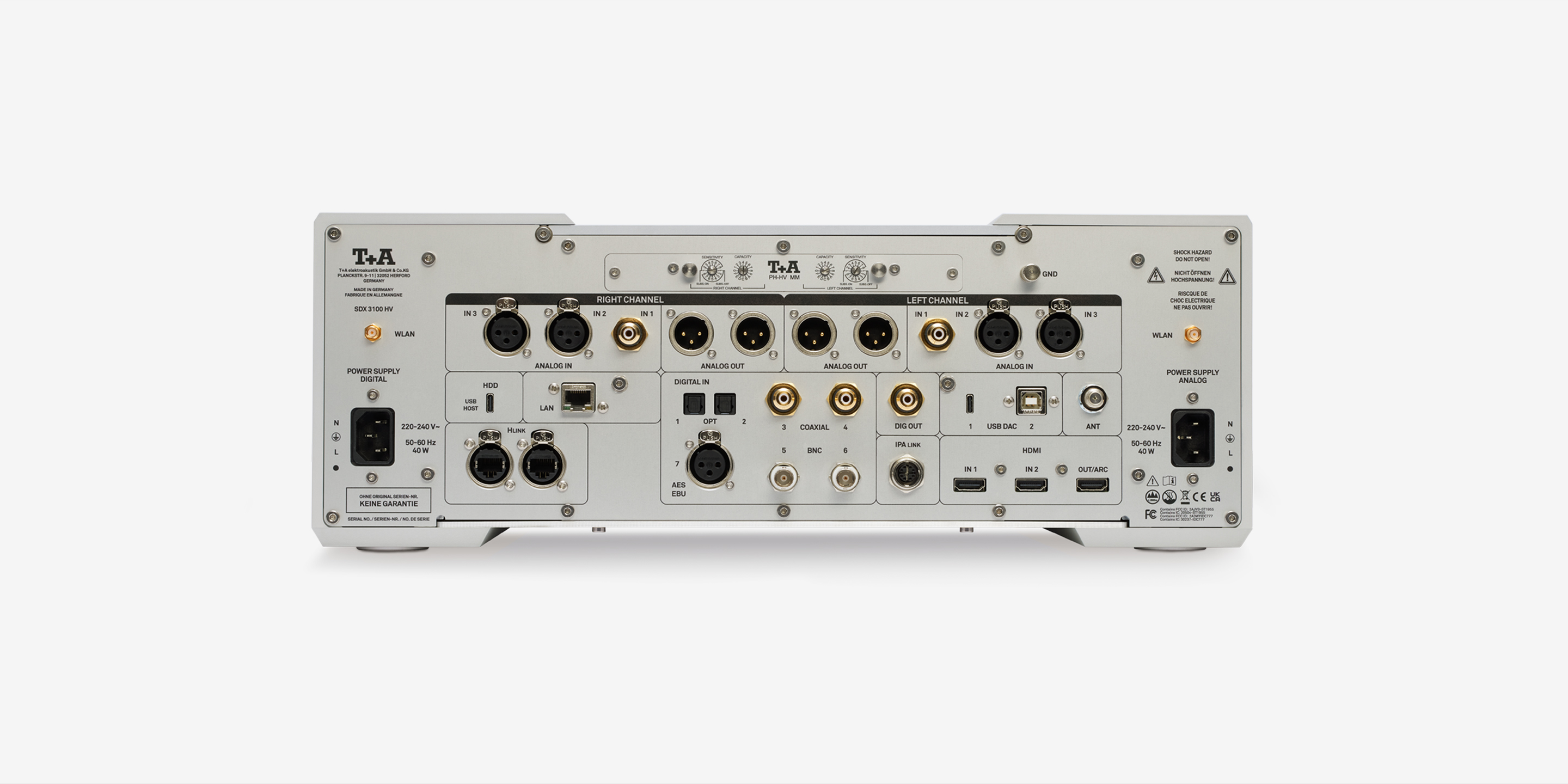
To perfectly integrate the SDX 3100 HV into any imaginable setup, the number of balanced analog inputs and outputs has been expanded. The resulting connectivity allows for an even more nuanced, tailor-made adaptation to your existing system. Whether it is modern digital sources or classic analog components—the SDX 3100 HV becomes the uncompromising control center of your entire system, making it incredibly comprehensive and flexible in its application.

In addition to the analog inputs, the SDX 3100 HV can be transformed into an audiophile hub for turntables in no time at all by installing an optional phono module. The highly sophisticated phono module from the HV series is now available in a new, particularly easy-to-install and adjust plug-in version, which handles all controls conveniently via the rear panel of the device. The only decision left to make is whether to choose an MC or MM module.

By integrating it directly into the resonance-optimized chassis and utilizing the power supply of the SDX 3100 HV, the extremely sensitive phono signal benefits from the outstanding technical and measurable conditions of the HV platform—delivering a warm, detailed, and deeply emotional analog experience at an absolute reference level.

Pure Analog Tone Control: Precision Without Compromise

Digital tone controls (DSP) often intervene deeply into the data stream and can compromise the fine dynamics and spatiality of a recording. T+A takes a consistently audiophile approach here: the tone control system integrated into the SDX 3100 HV operates entirely within the analog domain.

It not only allows for individual channel-by-channel boosting or cutting of bass and treble, but also offers the unique flexibility of selecting the individual corner/turnover frequencies. This allows the soundstage to be finely and precisely adjusted to your room acoustics, the characteristics of your loudspeakers, or the specific traits of the respective recording—completely lossless, free of phase errors, and preserving the full musical integrity of the original signal.


Specifications

Pre-Amplifier

Frequency response +0 /-3dB

0,5 Hz - 300 kHz

Signal / noise ratio

108 / 112 dB

THD | Intermodulation | Channel separation

< 0,001 % | < 0,001 % | > 108 dB

Nominal input sensitivity
High level (RCA) | Balanced (XLR)

250 mVeff ... 9 Veff / 10 kOhm | 500 mVeff ...18 Veff / 20 kOhm

Symmetrical  XLR

nom 1,45 Veff, max 19,6 Veff / 50 Ohm

Headphone output

Headphone output

6.3 mm jack, 4.4 mm Pentaconn (6 ohms),
Output impedance 6 ohms, discrete power amplifiers,
Class A operation with up to 200 mA

Connections

Analogue inputs

asymmetric co-axial (RCA) 250 mVeff ... 9 Veff / 10 kOhm
symmetric (XLR) 500 mVeff ...18 Veff / 20 kOhm

Analogue outputs

symmetric (XLR) nom 1.45 Veff, max 19.6 Veff / 50 Ohm

Output digital

1x co-ax, IEC 60958 (LPCM)

Digital inputs

1x AES-EBU 192 kSps /24 bit
6x S/P-DIF: 2x standard coax, 2 high quality BNC and 2 optical TOS-Link (32…192 kSps / 16-24 bit).
2x HDMI, 1x ARC (HDMI OUT)
2x USB: Device-Mode up to 768 kSps (PCM) and DSD1024*, supports asynchronous data transfer.
* DSD512 and DSD1024 only with a Windows PC with appropriate driver installed or with a Linux PC with Kernel 4.4 or higher.

Network connection

LAN: Fast Ethernet 10/100/1000 Base-T, 
WLAN:
IEEE 802.11a/b/g/n/ac/ax 2x2 MIMO
2.412 – 2.472 GHz (2.4 GHz ISM Band, 13 channels)
channel 1 – channel 13
North America FCC, Japan MIC, Europe ETSI
20 MHz bandwidth
5.180-5.825 GHz (5 GHz UNII-1/2/3 Band, 24 channels)
North America (IC und FCC):
5.180-5.600 GHz, 5.650-5.825 GHz
Europe, Japan (ETSI und MIC):
5.180-5.700 GHz
• max gain in 2.4 GHz band: 3.2 dBi
• max gain in 5 GHz band: 4.25 dBi
up to 17 dBm (at antenna connection)

2 x USB 2.0 Mastermode

D/A-Converter

PCM

Double-Differential-Quadruple-Converter with 4 D/A converters per channel, 32-Bit Sigma Delta, 705.6 / 768 kSps

DSD

T+A True-1Bit DSD D/A-Converter native bitstream, up to DSD 1024

Upsampling (PCM)

Programmable Digital Signal Processor with 4 selectable oversampling algorithms: FIR short, FIR long, Bezier/IIR, Bezier

Analogue filter

Phase-linear Bessel filter 3rd order, switchable 60 kHz or 120 kHz

Frequency response

PCM 44.1 kSps: 2 Hz - 20 kHz
PCM 48 kSps: 2 Hz - 22 kHz / DSD 64: 2 Hz - 44 kHz
PCM 96 kSps: 2 Hz - 40 kHz / DSD 128: 2 Hz - 60 kHz
PCM 192 kSps: 2 Hz - 80 kHz / DSD 256: 2 Hz - 80 kHz
PCM 384 kSps: 2 Hz - 100 kHz / DSD 512: 2 Hz - 100 kHz
PCM 768 kSps: 2 Hz - 120 kHz / DSD 1024: 2 Hz - 120 kHz

THD

< 0.001 %

S/N ratio

> 117 dB

Channel separation

> 110 dB

Streaming Client

Formats / Standards

MP3, AAC, OGG Vorbis, FLAC, WAV, AIFF, ALAC, DFF, DSF

Data rates

PCM 32...384 kHz,16/24 Bit; MP3 up to 320 kBit, constant and
variable data rate
DSD64; DSD128; DSD256

Streaming services

Tidal connect, Deezer, Qobuz connect, Spotify connect, HIGHRESAUDIO, Amazon Music HD, Apple AirPlay2, Plays with Audirvana, Roon, airable Radio and Podcasts

Features

Auto Network config. Internet Radio Station database (automatic updates), T+A Music Navigator App for iOS und Android

Tuner

Internet Radio

Airable Internet Radio Service (> 11000 Stationen weltweit)

FM, FM-HD*

*USA only

87.5 - 108 MHz; sensitivity 1 µV; S/N > 65 dBA

DAB, DAB+

168 -260 MHz (Band III); Sensitivity 2.0 µV, S/N > 96 dBA

Features

RDS/RDBS, Stationname (PS), Programme type (PTY), Radiotext (RT)

Bluetooth

Bluetooth Standard / Codec

Bluetooth standard BT 5.4

Profiles

A2DP (Audio), AVRCP 1.4 (Control) / aptX® HD, SBC, AAC, MP3

Frequency band

2.4 GHz

Max. transmit power

+4dBm (2.5 mW)

Grid connection/ Accessories / Dimensions

230 V version
115 V version

2x 220 - 240 V~ , 50-60 Hz
2x 110 - 120 V~, 50-60 Hz

Power consumption

maximal digital 40W, analog 60W
Standby < 0,5 W
Comfort Standby < 2W

Dimensions (H x W x D) / Weight

17 x 46 x 46 cm / 26 kg

Accessories

Remote control F3100, 2x W-LAN aerial, 2x power cord, XLR cord, RCA cord, USB C cable, FM aerial, HLink cable, User manual

Optional: MM or MC module

Finishes

silver laquer 47 or titanium laquer 64

Support

Catalogue

User manual

User manual SDX 3100 HV
TIDAL registration information

App

MusicNavigator G3 App

Operation with a computer / Firmware

Driver for Windows
Installation Manual
Notes on operation with PC's
Versions Info

License information

Reviews

Stereo 7/2026

Klangbilder in "Ultra-Schall"

Ultimativ aufgefächertes, detailreiches, homogenes und plastisch räumliches Klangbild der absoluten High End Klasse. Das war der Schlusspunkt des überragenden Auftritts des SDX 3100 HV von T+A. Wir nennen es "Ultra-Schall"

Other components of the HV-Series

Frontansicht M 40 silber

M 40 HV
Mono Power Amplifier

Frontansicht SD 3100 HV silber

SD 3100 HV
Reference Streaming DAC

Frontansicht PSD 3100 HV silber

PSD 3100 HV
Pre-amplifier-Streaming-DAC

Frontsicht PDT 3100 HV silber

PDT 3100 HV
Reference CD/SACD Transport

PA 3100 HV
Integrated Amplifier

Frontansicht MP 3100 HV G3 silber

MP 3100 HV G3
Multi Source SACD Player

Frontansicht P 3100 HV silber

P 3100 HV
Preamplifier

A 3100 HV
Power Amplifier

Frontansicht A 3000 Titan

A 3000 HV
Power Amplifier

Frontansicht PS 3000 HV silber

PS 3000 HV
Power Supply

Aufgeklappter Fächer aus Farbkarten

HV Individual